
Why clear, structured writing keeps tender evaluators engaged
By Rachael Davies, Senior Tender Specialist (Sydney)
I often wonder during tender submission, what is the best way to keep tender evaluators engaged as they read and evaluate RFT responses?
The fact of the matter is, we will likely never know who is evaluating our tender responses. So, it is difficult to target a specific format or style of writing that works for a specific person. Everyone digests information in different ways, so how do we present information that is easy to follow and keeps the evaluator engaged?
Below are some of the formats I find work best for keeping information clear, digestible, and engaging.
Structured headings/subheadings
This may seem obvious, but the power of separating your content using logical headings and sub-headings can help separate extensive and complex information into smaller chunks. It gives the reader a breath to process before moving on to the next topic.
This is a useful tactic when breaking down your tender requirements. Tender requirements often ask for an answer to more than one problem per requirement. Break down the problems into headings by giving it a lead heading based on the discussion topic, then give each problem its own subheading. This helps with keeping your writing focused and not missing crucial information. Additionally, a heading structure helps with document navigation and finding specific information quickly.
Bullet lists
Bullet lists are a great way to break down concepts that are related to each other but don’t necessarily need a specific order. Reading things in a linear format can improve readability and engagement. This is a great way to summarise key points or condense complex information.
This is a great format when conveying information such as:
Condensed data and complex information – highlighting statistics or outlining facts
Lists of items, features, or benefits – highlighting the key features and benefits of your technical solution
Strategic Information – breaking down your win themes.
Tables
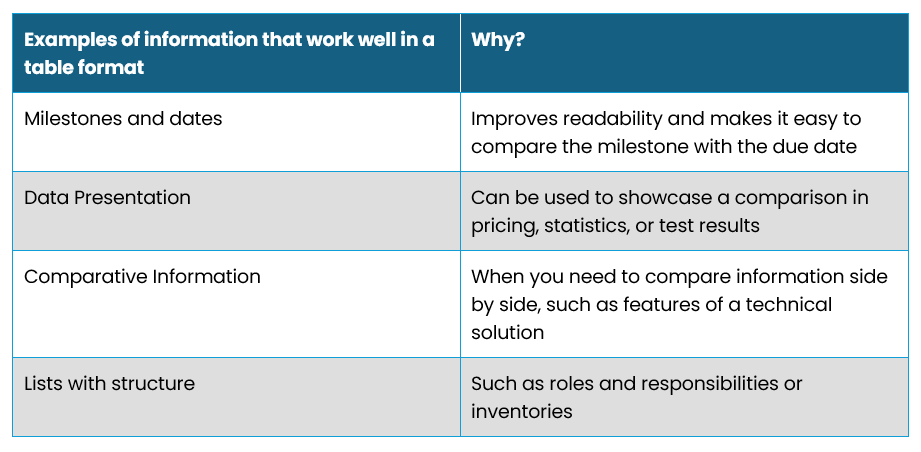
Tables are a simple yet effective way to add visual structure to your content. This format is best used when you need to display information such as comparative qualitative data, numerical values, or when you simply want to improve the structure of a list.
Tables are a great way to add structure to information, such as:
To summarise, there are a few different ways to get your point across without lengthy paragraphs. Use any method that works for you but keep your response clear and concise. Think of the evaluator.
Next steps
When writing your next tender response, consider how you digest information and how you can make it easier for your audience. In this case, the tender evaluator. Could you apply one of these formats, or do you have a method of your own?